Home Blog Page 6

Varun Misra on the Future of CRM Platforms in the Age of Artificial Intelligence

0
Varun Misra
Varun Misra

Customer relationship management platforms are undergoing a major transformation as artificial intelligence becomes embedded in the core of enterprise software. What once served primarily as a database for customer information is now evolving into an intelligent system capable of guiding business decisions in real time. According to enterprise architect Varun Misra, this shift is redefining how organizations manage customer engagement and operational strategy.

Misra, Director and Technical Architect at Salesforce, has spent more than 15 years designing large-scale CRM solutions and cloud architectures for global companies. His work spans enterprise implementations, AI integrations, and the development of scalable data ecosystems that support complex business environments.

For many organizations, CRM systems originally focused on storing records of customer interactions. Sales teams tracked leads and opportunities, while service teams documented support requests. The platforms provided visibility into customer relationships, but their capabilities were largely limited to data management and reporting.

That model is rapidly changing.

According to Misra, modern CRM platforms are evolving into intelligent operational hubs that combine real-time data, predictive analytics, and automation. Instead of simply recording what has happened, these systems can now anticipate customer needs, recommend actions, and automate many routine interactions.

One of the key drivers behind this transformation is the integration of artificial intelligence into enterprise platforms. AI-powered tools are increasingly capable of analyzing large datasets, identifying patterns in customer behavior, and generating insights that help businesses respond faster and more effectively.

“CRM systems are no longer just about tracking interactions,” Misra explains. “They are becoming systems that actively support decision making across the organization.”

The rise of AI-driven customer service tools illustrates this shift. Intelligent agents can now answer inquiries, guide users through service processes, and schedule appointments without direct human involvement. When properly integrated with enterprise data, these systems can deliver consistent responses that align with company policies and operational workflows.

At the same time, the success of modern CRM platforms depends heavily on data strategy. Many companies struggle with fragmented datasets spread across multiple legacy systems. Without a unified data foundation, the insights generated by AI tools can be limited or unreliable.

Misra believes organizations must prioritize data integration, governance, and system architecture if they want to unlock the full potential of CRM platforms.

As businesses continue to invest in cloud technology and AI, CRM systems are likely to play an even more central role in digital operations. Rather than serving as passive record systems, the next generation of CRM platforms will function as intelligent engines that help companies understand customers, streamline processes, and adapt quickly to changing market conditions.

Selamile Dlamini on Why Empathy Is the Next Competitive Advantage

0
Selamile Dlamini
Selamile Dlamini

Leadership is changing. The old model of technical expertise and top-down control is giving way to something more adaptive, reflective, and humane. Selamile Dlamini embodies that shift. Her work sits at the crossroads of strategy, design, and social innovation, showing how modern leaders can think analytically while acting empathetically.

Selamile Dlamini’s approach is grounded in the idea that effective leadership requires both scientific precision and creative intuition. Trained in engineering and business yet deeply influenced by the arts and humanities, she has built a career around bridging logic and imagination. “I see leadership as both science and art,” she says. “It’s about aligning data with empathy, structure with imagination, and ensuring that systems serve the people they’re built for.”

Across her global experience, Selamile Dlamini has led transformation efforts that connect human behavior with organizational design. She focuses on helping teams reimagine how they operate-shifting from rigid structures to systems that learn, adapt, and evolve. Her belief is simple but radical: the strength of any organization lies in its ability to listen, reflect, and respond to the human realities within it.

This multidimensional perspective stems from years of working in culturally diverse environments. Through her time leading initiatives across Africa and collaborating with teams in the United States, she has seen how innovation thrives when diverse voices shape the process. “Empathy is the foundation of global leadership,” she explains. “It’s the bridge between understanding and action.”

For Selamile Dlamini, the future of leadership depends on integrating three dimensions: data, design, and humanity. Data provides clarity, design enables creativity, and humanity ensures relevance. This framework, she argues, helps leaders navigate the tension between technological progress and social responsibility. It’s also a response to an era when automation and artificial intelligence are transforming the way people work and live. “Technology should extend human potential, not replace it,” she says. “The challenge for leaders is to make sure innovation doesn’t outpace reflection.”

Her thinking reflects a broader movement among leaders who see empathy not as a soft skill but as a strategic one. Selamile Dlamini often references the importance of bias awareness-recognizing that every decision, algorithm, and policy carries assumptions. By actively questioning those assumptions, she believes leaders can create systems that are not only more equitable but also more effective.

What sets Selamile Dlamini apart is her insistence that leadership must be both intellectual and moral. She views recognition and success as responsibilities, not milestones. Her academic achievements and fellowships, including awards for leadership and communication, shaped a philosophy centered on stewardship-using influence to empower others and design opportunities for collective progress.

As global systems grow more interconnected, Selamile Dlamini’s multidimensional model offers a blueprint for the next generation of leaders. The future, she argues, will belong to those who can translate complexity into clarity, and power into purpose. Leadership that blends empathy with evidence may not only be the most ethical path forward-it might be the most effective one.

Fabian Wigger’s Unconventional Path From Personal Loss to Global Market Leadership

0
Fabian Wigger
Fabian Wigger

Fabian Wigger’s professional trajectory began long before his first leadership role. Growing up in Germany in a single-parent household, he faced early personal loss and financial uncertainty that forced independence at a young age. Without family capital or a safety net, he realised early that long-term stability would depend entirely on his own decisions and execution.

Academically, Fabian performed strongly, but he chose not to follow the traditional university-to-career path expected in his environment. Instead, he focused on gaining practical experience and building real-world skills. That decision placed him on an unconventional route, one defined more by responsibility and outcomes than by formal credentials.

By his early twenties, he was leading international teams, managing complex client relationships, and driving large-scale revenue growth across competitive markets. According to Fabian, formal qualifications mattered far less than personal traits. He points to resilience, emotional intelligence, self-reflection, and comfort with making mistakes as decisive factors in earning trust and responsibility.

Mistakes, in particular, played a formative role. Rather than viewing them as failures, Fabian treated them as feedback loops. He believes this mindset accelerated learning and helped create a culture where progress mattered more than perfection. Over time, consistent effort and visible accountability reinforced confidence, both his own and that of the people he worked with.

Relationships also became a defining element of his career. Fabian avoided transactional networking in favour of long-term connection-building. He focused on understanding what people valued, staying in touch beyond immediate business needs, and showing up in person whenever possible. Several professional relationships evolved into partnerships, built on trust rather than short-term gain.

His mindset shift from survival to long-term growth traces back to his teenage years. Facing the absence of external support forced him to develop strong self-belief. Even in uncertain situations, he relied on disciplined work and patience, trusting that sustained effort would eventually compound.

Today, Fabian Wigger’s story reflects broader changes in how global careers are formed. Age, geography, and traditional credentials no longer define who can compete. Execution, adaptability, and the ability to build trust across cultures increasingly determine who succeeds in modern international markets.


Steven Ilous and the Rise of Smart Content: Shaping the Engagement Economy

0
Steven Ilous
Steven Ilous

Steven Ilous has spent his career at the intersection of creativity and technology. Today, as the founder and CEO of  Feature.io, he is leading the charge to change how and where we engage with content.

At the heart of this is the “why” for Steven: people want to be connected. In a world with an overwhelming amount of content, the stories that truly resonate are those where we feel seen, heard, and included. This is what drives everything Feature.io is building: personalized experiences that turn entertainment into a shared journey between creators, brands, and fans.

Feature.io: A Vision for Interactive, Data-Driven Media

At 18, Steven joined Stan Lee Media as a Senior Animator, where he worked on the world’s first webisodic animated series. This early success opened doors to bigger opportunities. He contributed to groundbreaking visual effects in The Matrix Reloaded, The Matrix Revolutions, and The Polar Express, where he helped pioneer performance capture technology that became a foundation for major franchises like Avatar and Call of Duty.

However, for Ilous, these achievements were stepping stones toward something greater. In 2021, Steven founded Feature.io to turn that vision into reality. At its core is Smart Content, a technology that transforms any digital experience – whether a live stream, a broadcast, or an in-venue event – into an interactive, measurable, and monetizable moment. Features’ platform is like the “Stripe for Content,” allowing creators and brands to personalize media in real-time, reward participation, and gather meaningful first-party data.

This approach has already delivered big results. In a campaign for Netflix’s Love, Death & Robots, Feature’s Smart Content generated over 100 million impressions and brought in 650,000 new users. That success caught the attention of brands like Mobil 1 and Porsche, who now utilize Feature to create more profound and rewarding fan experiences.

Feature.io’s mission goes beyond marketing metrics. Steven believes the media should create a human connection. “The power of this technology can pull people closer to the things they hold dear. I want people to feel included and seen,” he says. That’s what drives the company’s focus on audience participation as the key to the future of engagement.

A great example of this is Lollipop Racing, a project that combines gaming and streaming into one interactive experience. From a Hollywood team that brought you Training Day, Snowpiercer, and Halo, Lollipop Racing brings viewers more than just a spectator sport. They have the ability to make decisions that affect the storyline, reveal behind-the-scenes content, and win rewards as the game progresses. Rather than a predetermined playlist of prompts, the narrative shifts according to the spectators’ own movements, turning them from passive observers into active participants.

Tech-Driven Storytelling for the Engagement Economy

Steven’s work at Feature.io is part of a bigger trend he calls the Engagement Economy. This new model flips the old rules of media on their head. Instead of measuring views or selling subscriptions, companies can now create value from active audience participation.

For Steven, the turning point came when generative AI was integrated into Smart Content. By partnering with companies like Luma AI, Feature.io allows media companies to create entirely new audience experiences. Instead of pushing the same trailer to every fan, a franchise could deliver a generative experience, where the scenes you see are shaped by the characters you follow and the choices you make. For brands, it’s the difference between a static ad and an AI-generated short film featuring your dream car, in a world inspired by your own interests.

A recent Deloitte report found that 56% of Gen Z feel social video content is more relevant to them than traditional TV or film. These audiences don’t want to sit back and watch. They want to play a role in the stories they love.

That’s what Feature.io does. It doesn’t just track engagement; it creates a feedback loop where participation drives the next chapter of the story and builds stronger emotional connections between fans and the brands or creators they love.

Leading the Next Generation of Media Creators

Steven’s story is one of constant reinvention. In addition to Feature.io, he’s worked on over 16 feature films, directed music videos and digital spots for Ultra Music and Condé Nast, and created original video content for Kanye West’s live tour. His sci-fi project 2088 went viral and cemented his reputation as a creative innovator.

Steven is also shaping the future of storytelling through ongoing partnerships with global companies like Google Cloud and Luma AI. These collaborations expand Feature.io’s technical capabilities, helping the company scale across media, sports, and entertainment.

As the media landscape continues to evolve, Steven remains focused on his original vision: storytelling that brings people together. For him, the goal isn’t to replace traditional entertainment but to enrich it. Whether through blockbuster franchises or indie projects, Feature.io is making stories more personal, more interactive, and more memorable.

With Feature.io preparing for its next stage of growth, Steven shows no signs of slowing down. His career stands as proof that when technology and creativity meet, the possibilities for storytelling and human connection are endless.

About Steven Ilous

Steven Ilous is a CEO and creative technologist shaping the future of media and ad tech. As founder of Feature, he created Smart Content™, a platform that transforms passive media into interactive, data-rich experiences. His work spans record-breaking IP like Smart Content used by  Netflix, Porsche, and Mobil1. With a background in performance capture on The Matrix Franchise and The Polar Express, Ilous blends deep technical expertise with visionary storytelling to drive innovation at the intersection of content, commerce, and technology.

Phoenix Energy Bonds Explained: What Investors Should Know in 2025

0
Phoenix Energy

By Adam Dohler, Senior Vice President of Capital Markets, Phoenix Energy

Every week, I speak to dozens of people—current investors, prospective investors, and those just curious about how we operate at Phoenix Energy. And almost every conversation starts the same way: “Adam, how does Phoenix Energy generate the returns it uses to pay bondholders?”

That’s a fair question. I’ve spent close to two decades on Wall Street desks analyzing bond offerings from companies large and small, so I understand what investors want to know..

I’ll walk you through the questions I get most often: Who is Phoenix Energy? What does Phoenix Energy do? And how do Phoenix Energy bonds work? These are the fundamentals every investor deserves to understand before making any decisions. This is the same information we cover during our investor webinars, which are designed to provide a clear overview of how Phoenix Energy operates and how we’ve positioned our business to support our bondholders.*

*Investors have historically received either simple interest whereby they receive monthly interest payments or compounded interest where interest is added to the outstanding principal on a monthly basis. Past performance is not indicative of future results.

Who Is Phoenix Energy?

Phoenix Energy is a private, family-founded oil and gas company. We’re not controlled by Wall Street firms or other big institutions. We built the company from the ground up, and today we operate in some of the most prolific basins in North America with a special focus on the Williston Basin in North Dakota and Montana.

With several offices across the U.S. and a team of over 154 full-time employees, we drill our own wells, manage our own operations, and acquire assets that deliver near-term, high-quality cash flow. As of December 2024, Phoenix Energy was the 11th largest oil producer in North Dakota—a notable achievement for a privately-owned firm that began in 2019.

What Does Phoenix Energy Do? Our Multi-Segment Strategy Explained

At Phoenix Energy, we’ve intentionally built a multi-segment operating model that allows us to remain flexible, opportunistic, and equipped to navigate an industry that is anything but predictable. Unlike most energy companies that specialize in just one aspect of the upstream oil and gas business, we deliberately participate across three key segments—each with its own risk profile, return timeline, and operational intensity.

Why do we do it this way? Because having access to multiple levers—royalty interests, non-operated working interests, and fully operated wells—gives us the ability to adapt and allocate capital where the returns are strongest. It also helps us mitigate against volatility in the sector. When prices, regulatory environments, or operational timelines shift in one segment, we can lean more heavily into another. This multi-pronged approach not only creates durability in our business model but also enhances our ability to meet our investor obligations and long-term goals.

Here’s how it breaks down:

  1. Royalty Interests: We own the mineral rights. Other companies do the drilling. We receive monthly royalty checks when oil and gas is sold by the third-party operator—completely passive income.
  2. Non-Operated Working Interests: Here, we co-invest in wells alongside operators like Occidental or Kraken. We don’t run the operations, but we put capital in and receive a proportionate share of the revenue based on our interests in the well—again, without having to manage the project, this is largely passive income too.
  3. Operated Wells (Phoenix Operating): This is our most hands-on division. We acquire the mineral rights, plan and drill the wells, and sell the oil and gas ourselves. This part of our business has grown rapidly, thanks in part to the data we’ve gathered from our non-op partners and a proprietary underwriting technology we have developed. By controlling the entire lifecycle—from acquisition to production—we gain full transparency and decision-making power, allowing us to capture more of the economics and improve operational efficiency.

Each of these segments offers distinct advantages—and when combined under one roof, they give us the flexibility to pursue the most economically viable path at any given moment. That’s the essence of our strategy: adaptiveness backed by technical rigor. Because when you can see the full picture—and you’re not restricted to just one approach—you make better decisions for your business, and for your investors.

This diversified strategy doesn’t eliminate risk, but it helps us balance and manage it effectively. And in this industry, that’s one of the biggest competitive advantages you can have.

We’ve built an internal (or “a proprietary”) software platform that allows us to identify, analyze and underwrite  oil and gas mineral rights with increased precision. It’s not dissimilar to how platforms like Zillow estimate home values, but tailored to oil-rich acreage.

This system helps us identify mineral rights and well locations that meet our criteria for near-term, cash-generating potential. We don’t pursue speculative opportunities. We look for mineral assets where we expect to recover our capital within 12 to 24 months and generate positive cash flow thereafter.

How Do Phoenix Energy Bonds Work? Understanding Our Bond Offerings

One of the ways Phoenix Energy operates differently is by raising capital directly from investors. This means we are able to avoid layers of fees and provide our investors with direct access to our in-house professionals that are registered representatives of Dalmore Group, LLC a registered broker-dealer and member of FINRA/SIPC.

For several years, Phoenix Energy has offered bonds under Section 506(c) of Regulation D to accredited investors, with annual interest rates ranging from 9-13%, depending on investment amount and term length.* These offerings remain active and continue to fund key aspects of the company’s drilling and production efforts.

In May 2025, Phoenix Energy expanded its offering of debt securities through a Registered Offering, available to investors in select states including Florida, Colorado, and Nevada. This offering does not require an investor to meet the SEC definition of accredited, although certain financial suitability standards must still be met. Investors in both offerings are purchasing debt securities issued by Phoenix Energy — not direct interests in oil and gas assets — and all investments carry risk.

Before investing, all participants must review the applicable offering documentation and other materials about Phoenix Energy that can be obtained for free on Edgar on the SEC’s website at www.sec.gov or can be obtained directly from Phoenix Energy.

Phoenix Energy has grown significantly in the past few years, supported by direct investment from individuals who believe in our mission and business model. This is not a startup. We’ve raised over $1 billion in capital and built a team and platform that we believe can support the company’s long-term goals and obligations to its investors.

*Investors have historically received either simple interest whereby they receive monthly interest payments or compounded interest where interest is added to the outstanding principal on a monthly basis. Past performance is not indicative of future results.

Real Conversations. Real Investors

At Phoenix Energy, we’ve prioritized building personal relationships with investors. In fact, someone on our team has spoken directly with nearly every one of the 5,500+ individuals who have invested with us to date.

If you’re looking to learn more about Phoenix Energy bonds and note offerings, you can download our offering documents from our website, review our SEC filings on Edgar, or join one of our live investor webinars at phoenixenergy.com/webinar. . We’d be happy to walk you through how Phoenix Energy debt securities work and answer any questions you may have.

We’re always happy to have a conversation.

Adam Dohler is the Senior Vice President of Capital Markets at Phoenix Energy. With over 20 years of experience on Wall Street bond trading desks, he now helps oversee the firm’s fixed-income strategies and investor relationships. He is licensed through Dalmore Group, LLC in all 50 states and speaks directly with investors daily.

Disclosure: Phoenix Energy One, LLC (“Phoenix Energy”) conducts offerings of debt securities pursuant to (i) the exemption from registration provided by Rule 506(c) of Regulation D and (ii) an effective registration statement (including a prospectus) filed with the Securities and Exchange Commission (the “SEC”) (the “Registered Offering”). Certain of Phoenix Energy’s non-executive personnel are licensed registered representatives of Dalmore Group, LLC. These registered representatives conduct securities business through Dalmore, a registered broker-dealer and member of FINRA/SIPC. Dalmore and Phoenix Energy are not affiliated entities. Participation in an offering is subject to certain criteria, including meeting financial suitability requirements. The securities offered are speculative, illiquid, and you may lose some or all of your investment. Before you invest, you should read the offering documentation for the relevant offering, including, with respect to the Registered Offering, the prospectus and the other documents Phoenix Energy has filed with the SEC, which you may get for free by visiting EDGAR on the SEC’s website at www.sec.gov. Alternatively, Phoenix Energy or Dalmore will arrange to send you any applicable offering documents you request. This communication does not constitute an offer to sell or the solicitation of an offer to buy any securities, and shall not constitute an offer, solicitation, or sale of any security, in any jurisdiction in which such offering, solicitation, or sale would be unlawful. See full disclosures.

This article contains forward-looking statements based on our current expectations, assumptions, and beliefs about future events and market conditions. These statements, identifiable by terms such as “anticipate,” “believe,” “intend,” “may,” “expect,” “plan,” “should,” and similar expressions, involve risks and uncertainties that could cause actual results to differ materially. Factors that may impact these outcomes include changes in market conditions, regulatory developments, operational performance, and other risks described in our filings with the U.S. Securities and Exchange Commission. Forward-looking statements are not guarantees of future performance, and Phoenix Energy undertakes no obligation to update them except as required by law.


Impact of Sanctions on Russia Questioned as Shadow Fleet Evades Oil Restrictions

0
Impact of Sanctions on Russia Questioned as Shadow Fleet Evades Oil Restrictions

The effectiveness of Western economic measures against Russia faces mounting scrutiny as sophisticated evasion mechanisms undermine their intended objectives. The emergence of Russia’s shadow fleet has fundamentally altered the sanctions landscape, enabling Moscow to circumvent oil and gas restrictions while maintaining substantial revenue streams that were supposed to be severed.

Shadow Fleet Operations Undermine International Sanctions

The limited economic consequences for Russian operations has been significantly diminished through the strategic deployment of shadow vessels designed specifically to evade restrictions. Based on The New York Times reports, estimates by the Kyiv School of Economics indicate that approximately 70 percent of Russia’s seaborne oil exports travel on these vessels, representing a systematic circumvention of Western economic pressure.

This sophisticated network demonstrates how targeted nations can adapt to sanctions regimes through innovative workarounds. Russian companies have invested heavily in shadow fleet infrastructure, creating an entire parallel shipping industry that operates outside traditional regulatory frameworks. The scale of this operation reveals fundamental weaknesses in the sanctions design that policymakers failed to anticipate.

Individual Cases Expose How Russian Sanctions Face Circumvention

The case of John Ormerod illustrates how multilateral economic restrictions can be systematically circumvented through complex financial arrangements. Splash247 reports, the British ship finance veteran allegedly purchased at least 25 secondhand tankers between December 2022 and August 2023, totaling over $700 million in transactions financed by Russian oil producer Lukoil.

Each tanker acquisition utilized special-purpose companies established in the Marshall Islands, while Lukoil’s Dubai-based Eiger Shipping provided funding through advance charter payments. This intricate structure demonstrates the sophisticated legal and financial engineering employed to bypass restrictions, highlighting how Western economic pressure continues to prove ineffective as intended when faced with determined circumvention efforts.

Are Russian Sanctions Working When EU Strategy Faces Challenges

The European Union’s approach to sanctioning Russia has encountered significant structural limitations that question its long-term viability. The question of whether economic pressure against Russia is achieving results becomes pertinent when examining the bloc’s “future-proofing” strategy, which aims to permanently block Russian gas access to European markets.

According to The New York Times, Paula Pinho, chief spokesperson for the European Commission, stated that the strategy seeks to “dissuade any interest, and notably interest from investors” regarding Russian energy infrastructure. This approach targets Nord Stream 1 and Nord Stream 2 pipelines, despite their current non-operational status.

However, this permanent exclusion strategy eliminates potential negotiation leverage that could prove valuable during future diplomatic efforts. As mentioned in The New York Times, Russia has spoken of reviving Nord Stream in its discussions with the Trump administration, according to its foreign minister, Sergei Lavrov, suggesting that maintaining energy relationships as negotiating tools might be more strategically valuable than permanent prohibition.

Economic Consequences and Market Adaptations

The shadow fleet phenomenon represents more than simple sanctions evasion; it demonstrates Russia’s successful adaptation to economic pressure through market innovation. These vessels operate in a regulatory grey area that exploits jurisdictional gaps between different national authorities, making comprehensive enforcement extremely difficult.

The financial success of shadow fleet operations provides Russia with continued revenue streams that were supposed to be eliminated through sanctions. This economic resilience undermines the fundamental premise that economic pressure would compel behavioral changes in Russian foreign policy.

Enforcement Complexity and Compliance Failures

Western authorities face substantial challenges in addressing shadow fleet operations due to their transnational nature and sophisticated legal structures. The UK’s sanctions against Ormerod and associated entities represent reactive measures rather than proactive prevention, indicating that enforcement efforts consistently lag behind evasion innovations.

The complexity of tracking beneficial ownership through multiple jurisdictions and shell companies creates enforcement gaps that sophisticated actors can exploit. These structural weaknesses suggest that current sanctions architecture lacks the flexibility and comprehensiveness necessary to address determined circumvention efforts.

Broader Implications for Sanctions Policy

The shadow fleet’s success in circumventing restrictions raises fundamental questions about the utility of economic sanctions as foreign policy tools. When targeted nations can develop entire industries dedicated to sanctions evasion, the effectiveness of such measures becomes questionable.

The development of alternative trade networks and payment systems through shadow fleet operations demonstrates that sustained economic pressure can drive innovation rather than capitulation. Russia’s ability to maintain substantial oil export revenues despite extensive restrictions indicates that comprehensive economic measures against Moscow may inadvertently strengthen target nations’ economic independence rather than weakening their resolve.

The shadow fleet phenomenon suggests that future sanctions regimes must account for sophisticated evasion capabilities from their inception, rather than attempting to address circumvention through reactive enforcement measures. The current approach of layering additional restrictions on top of already-circumvented measures appears to generate regulatory complexity without corresponding effectiveness improvements.


Prepare Now, Not Later: A Property Lawyer’s Advice for Hurricane Season

0
Galen M. Hair
Galen M. Hair, Managing Partner at Insurance Claim HQ

Every year, millions of Americans brace for hurricane season by boarding up windows, buying flashlights, and stocking water. However, according to Galen M. Hair, partner at Insurance Claim HQ, there’s one step that most people completely overlook, and it’s the one step that could save them thousands of dollars after the storm passes.

“Document the contents inside your home. Take photos of everything, I mean, everything,” Galen says in a recent video. While most people focus on protecting their homes from physical damage, they forget about proving what they actually owned before the disaster, and in the world of property insurance claims, what you can prove often matters more than what you lost.

Why Documentation Matters More Than You Think

After a hurricane, walking into a damaged or destroyed home can be overwhelming. It’s not just the loss of property; it’s the scramble to remember what was there, what it was worth, and how to prove it to an insurance adjuster.

That’s where Galen’s years of experience representing policyholders come into play. He explains that many people find themselves at a disadvantage after the storm, not because they lack insurance but because they lack documentation.

He urges homeowners to move beyond quick phone snaps of living rooms and instead film methodically, walking through closets, drawers, pantries, and attics. Slow, clear videos that show what you own and, in some cases, even the brands or serial numbers, can become your strongest asset when filing a claim.

Too often, policyholders face resistance when trying to recover the full value of what they lost. Galen’s firm has seen thousands of clients shortchanged by insurers who claim there’s no proof of what was damaged, and in many of those cases, it was true: there was no proof because the homeowner hadn’t thought to film or photograph their belongings before the storm.

According to the National Oceanic and Atmospheric Administration (NOAA), the U.S. sees an average of 14 named storms and 7 hurricanes each season. That number is expected to remain steady or rise due to warming ocean temperatures. For homeowners, that means the risks aren’t hypothetical; they’re annual.

The Cloud Could Save You Thousands

Even when people do record their belongings, they often make a simple but costly mistake: they store those videos and photos locally on a phone or hard drive that’s just as vulnerable as the house itself.

In Galen’s view, true preparation means protecting the records that protect your claim. That means uploading everything to the cloud before the first storm warning. Whether it’s Google Drive, Dropbox, or another secure platform, backing up your documentation ensures that you can access it even if your devices are damaged or lost.

“There is a big difference between getting a quick video of the inside of your closet and actually thumbing through your clothes and getting video that actually captures the tags,” Galen emphasizes. This kind of thorough documentation gives insurance adjusters no room to argue, and it gives families peace of mind.

The team at Insurance Claim HQ has recovered over $1 billion for policyholders across the country, helping more than 70,000 families get back on their feet, and in Galen’s experience, homeowners who prepare in advance often see faster, fairer results.

Insurance may promise protection, but the homeowner still has the burden of proof. That’s why Galen says the best time to prepare is long before a storm warning appears on your screen.

A Lawyer Who’s Been There

Galen’s passion for disaster preparation didn’t begin in a courtroom; it started years ago when he volunteered in New Orleans after Hurricane Katrina. He helped clean out homes, deliver supplies, and witness firsthand the toll disasters take not just on property, but on people.

Later, while working as a defense attorney for a boutique firm in New York, Galen began to understand how insurance companies handle claims and the tactics they use to delay or deny them. It wasn’t until he helped a client whose house had burned down that everything clicked.

“Navigating the complexities of insurance can be overwhelming, but with the right guidance, claimants can level the playing field,” Galen says.

That moment inspired him to switch sides and advocate for policyholders. He founded Insurance Claim HQ with one goal: to help people get what they’re owed after the unthinkable happens. Since opening its doors, the firm has played a critical role in helping storm survivors throughout the Gulf Coast and beyond.

His team doesn’t just wait for clients to walk in after a disaster; they believe in education and proactive protection. That’s why Galen speaks up every year before hurricane season. His message isn’t fear-driven. It’s grounded in empowerment. He wants every homeowner to know: your best chance at recovery starts with preparation.

June through November is more than a stretch of months; it’s a season when everything can change overnight. While we can’t always stop the storm, we can take steps to face it better prepared.

About Galen M. Hair

Galen M. Hair, Managing Partner at Insurance Claim HQ, is a nationally recognized property insurance attorney known for aggressively representing policyholders across the U.S. With thousands of families helped and a reputation for high-stakes litigation wins, he has been named a Super Lawyers Rising Star and one of the National Trial Lawyers Top 100. Learn how to protect your property from disaster at www.insuranceclaimhq.com.

About Insurance Claim HQ

Insurance Claim HQ is a premier property casualty insurance law firm powered by Hair Shunnarah Trial Attorneys and headquartered in Metairie, Louisiana. With over $1 billion recovered for more than 70,000 clients, the firm brings 25+ years of legal experience and unmatched insight into how insurers operate. Discover how they fight for policyholders at www.insuranceclaimhq.com.

From Cannes to the Metaverse: MILC Powers a New Era of Global Media

0
Hendrik Hey
Hendrik Hey, co-founder of Digital Genesis and founder of Media Industry Licensing Content

The 2025 Cannes Film Festival wasn’t just about cinema; it was a glimpse into the future of storytelling. At the center of this shift was the unveiling of a $20 million co-investment fund by Goldfinch Holdings and the Digital Genesis Fund. However, more than just a financial announcement, the moment marked the launch of something far more ambitious: a global infrastructure play for decentralized, AI-powered media.

Hendrik Hey, co-founder of Digital Genesis and founder of MILC (Media Industry Licensing Content), isn’t just betting on the future; he’s building it. With MILC positioned as a core infrastructure layer in this movement, the Cannes announcement was a declaration that the entertainment industry is shifting, and this time, the space is borderless, immersive, and decentralized.

A Strategic Partnership Built for Scale, Not Speculation

This $20 million initiative is designed to do more than fund isolated projects – it’s building the operational backbone for a new kind of media economy. Through Digital Genesis and Goldfinch’s alliance, the goal is to expand the reach of Web3 and metaverse tools across markets, creative sectors, and continents.

MILC isn’t a side partner in this plan – it’s the connective tissue. As a fully functional Web3 media environment, MILC supports creators and companies with tools for licensing, tokenized distribution, ad monetization, and immersive audience engagement. It’s not a prototype; it’s a working product.

The first rollout includes projects like Lumiere, a tokenized crowdfunding platform backed by Animoca Brands and Rolling Stone. It’s turning audiences into owners by letting everyday fans fund the media they love. There’s also The Squad, a decentralized production studio using smart contracts to give creators full IP control and open new pipelines for collaborative storytelling.

MILC now ties everything together. From rights management and branded content to audience rewards and metaverse delivery, the MILC platform delivers the backbone needed to scale decentralized media globally. Hendrik Hey calls this moment a “new Hollywood,” but this time, there’s no single city behind it, just a growing constellation of creators, tools, and communities.

The market signals back that this isn’t a futuristic gamble. According to recent data, the global blockchain market hit $26.91 billion in 2024 and is projected to reach nearly $1.88 trillion by 2034, growing at a staggering CAGR of 52.9%. In other words, the timing couldn’t be more right for media to meet infrastructure at the edge of tech.

From Festival Hype to Global Implementation

What happened in Cannes isn’t staying in Cannes. The $20 million announcement kicked off a calendar of global activations. First up is the Indonesia Creative Investment Forum, a two-day event co-hosted by Goldfinch Indonesia and supported by Synco, Goshen Prime, and the Indonesian Creative Ministry. It will bring together creators, investors, and policy leaders to explore how platforms like MILC, Lumiere, and The Squad can power Southeast Asia’s creative economy.

Indonesia is the first major touchpoint in a rollout that’s designed to be regionally adaptive and globally networked. Hendrik Hey and the team are already speaking with prospective partners in multiple markets to expand this model of co-financing, tokenized ownership, and metaverse-ready distribution.

As Hendrik Hey stated in Cannes, “We are no longer just creating content; we are building worlds. And in these worlds, everyone becomes part of the story.” This isn’t marketing language; it’s the architecture of a new media era.

Education: The Quiet Engine Behind the Revolution

For all the momentum, Hendrik Hey and MILC understand one truth clearly: no infrastructure scales without understanding.

That’s why MILC is taking an education-first approach across Europe. Their Web3 consulting webinars aren’t just brand positioning; they’re onboarding sessions for traditional companies ready to enter this new media economy. Through partnerships with regional Chambers of Industry and Commerce, including Hesse and Koblenz, MILC has already introduced executives to real-world applications of blockchain, NFTs, and smart contracts.

On the 4th of June, 2025, MILC hosted another session with the East Württemberg Chamber of Industry and Commerce. The aim of the webinar was to demystify the jargon and show exactly how decentralized tools can create value, whether for a TV studio, a marketing agency, or a manufacturing business looking to future-proof its digital footprint.

MILC’s goal is to empower more businesses to shift from passive observers to active participants. Their consulting approach includes readiness assessments, custom workshops, and long-term support. The idea is not just to explain Web3 but to help businesses implement it at scale.

Cannes was never the destination. It was the starting point. The $20 million fund was the green light for a decentralized media roadmap that stretches across geographies, industries, and tech stacks.

As the rollout moves from Europe to Southeast Asia and beyond, one thing is clear: the future of storytelling isn’t coming from one company, one country, or one screen. It’s being built collaboratively by creators, by businesses, by technologists, and by the people who believe that media shouldn’t just be watched – it should be lived.

About MILC

Hendrik Hey is the Founder of MILC (Media Industry Licensing Content), a pioneering company in the blockchain and metaverse space, with a strong background in media and content. MILC operates a real live metaverse platform that serves not only the media industry but also various industrial use cases. The company also focuses on Web3 consulting, aiming to support complex real-world industries on their way into Web3. MILC is a sister company of European media giant Welt der Wunder, which Hey founded over 25 years ago. For more information, please visit https://www.milc.global and https://www.ionpowergrid.com

Cluely: The AI “Cheating” App: Disrupting the Status Quo with Unapologetic AI

0
Roy Lee
Roy Lee

Cluely, a San Francisco-based AI startup launched in 2024, isn’t here to play nice – it’s here to obliterate outdated notions of productivity and performance. With a jaw-dropping $5.3 million in seed funding from Abstract Ventures and Susa Ventures, Cluely has turned heads by racking up $3 million in annual recurring revenue (ARR) in just 16 days post-launch. Born from its rebellious roots as InterviewCoder, a so-called “cheating app” designed to help software engineering students dominate technical interviews, Cluely has morphed into an “Everything App” that delivers real-time, undetectable AI assistance. Whether it’s nailing a high-stakes job interview, closing a sales deal, or powering through deep work, Cluely’s in-browser AI operates like a secret weapon, providing answers and insights faster than you can blink. The company’s mission is to turbocharge human potential, making rote memorization and outdated gatekeeping irrelevant in a world where AI is king. With 70,000 users hooked and a viral launch video that scored 12 million views, Cluely is rewriting the rules of work and education with zero apologies.

A Viral Sensation Sparking Global Debate

Cluely’s meteoric rise began with a launch video that didn’t just go viral-it detonated, amassing 12 million views and igniting a firestorm of debate. The video’s bold pitch, branding Cluely as the ultimate “cheating” tool, converted 0.25% of viewers into 70,000 users in mere weeks, proving the world is ready for its audacious vision. Available for free on macOS with a $20/month Pro subscription for unlimited access, Cluely’s accessibility has fueled its explosive growth. Its manifesto draws a line in the sand: just as calculators and spellcheck revolutionized their eras, Cluely’s AI is the next leap in human-computer collaboration. By prioritizing outcomes over traditional metrics, the app empowers users to focus on creativity and strategy, whether they’re outsmarting coding challenges or crafting killer sales pitches. Critics, including AI educators, have slammed Cluely for potentially eroding trust in academic and professional assessments, but the company shrugs off the noise. It’s shifted its messaging to highlight real-world applications-think sales calls, client meetings, and high-pressure work scenarios-while staying true to its disruptive core. Cluely isn’t just a tool; it’s a middle finger to systems that value memorization over innovation.

Pushing Boundaries Beyond the Browser 

 Cluely’s ambitions stretch far beyond its current in-browser prowess. The company is already eyeing a future where AI isn’t just software but part of your very existence. Think smart glasses, AI-powered wearables, or even neural interfaces that make you a walking, talking supercomputer. This isn’t science fiction; it’s Cluely’s roadmap. The startup’s $5.3 million war chest and $3 million ARR underscore its ability to scale fast, but it’s the vision that sets it apart. Cluely sees a world where AI anticipates your needs before you do, rendering traditional barriers like exams or interviews obsolete. While critics cry foul, supporters hail it as a democratizing force, leveling the playing field for those navigating cutthroat academic and professional landscapes. Cluely’s not backing down, it’s doubling down on a future where AI augmentation is as normal as breathing.

Leading the Charge for an AI-Driven Future 

 With 70,000 users and counting, Cluely has tapped into a generation hungry for tools that match the speed of the AI age. Its $5.3 million funding round signals unshakable investor confidence, while its freemium model-free access with a premium Pro plan-ensures broad reach and sustainable growth. The company’s ability to hit $3 million in ARR in under three weeks showcases its scalability and magnetic appeal, particularly among students and professionals facing high-pressure environments. Cluely’s technology, which slips past traditional detection methods, has made it a lightning rod in the AI ethics debate, forcing institutions to rethink how they assess talent. But Cluely isn’t here to ask permission; it’s here to redefine productivity. By envisioning a world where AI is seamlessly integrated into every decision, from boardroom pitches to classroom exams, Cluely is challenging the very structures of work and education. Its influence extends beyond tech, sparking a cultural reckoning about AI’s role in society. Love it or hate it, Cluely is driving the conversation, proving that the future of work isn’t coming, it’s already here, and it’s powered by Cluely.

About Cluely

Cluely is a San Francisco–based AI startup that provides real-time performance support for job interviews, sales calls, and exams. Built with a discreet, in-browser interface, Cluely’s technology allows users to access personalized, context-aware assistance without being detected. What began as a viral project by Columbia University student Roy Lee has grown into a venture-backed company with $5.3 million in seed funding from Abstract Ventures and Susa Ventures. Cluely is redefining how people prepare, perform, and compete in an AI-powered world. To learn more, visit cluely.com.

Embracing Digital Transformation: A Glimpse into the Future of Government Operations

0
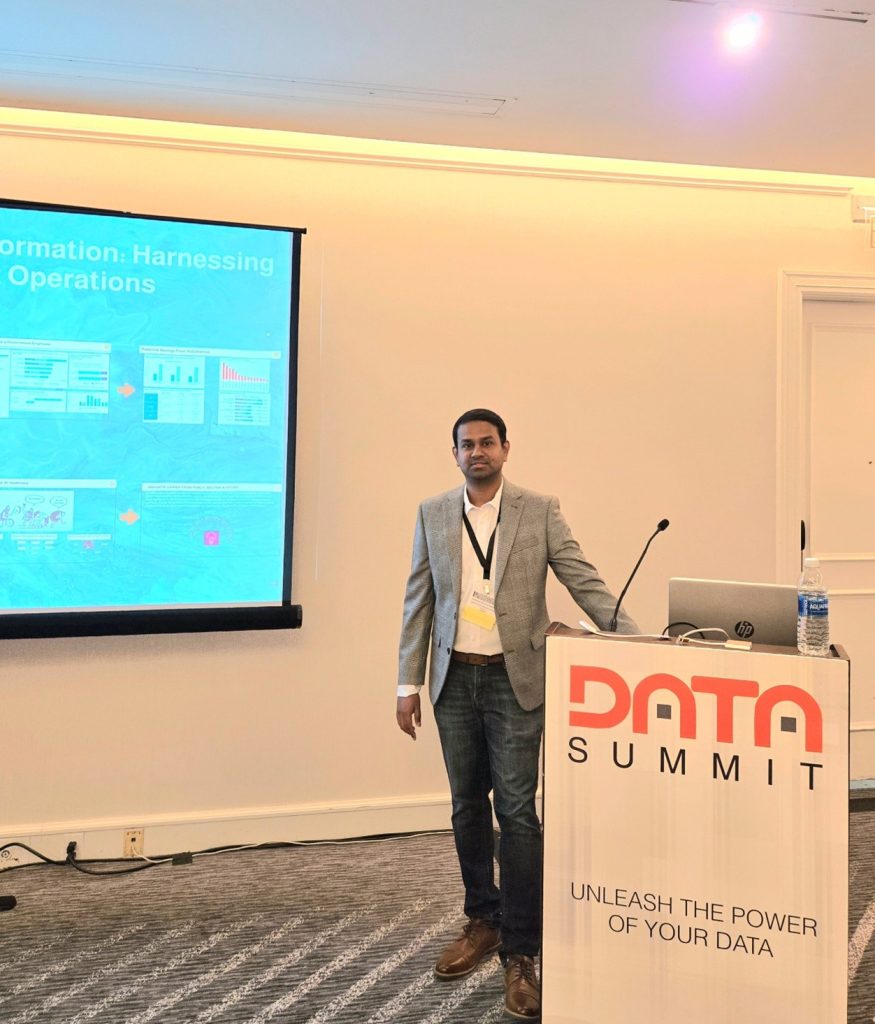
Hariharan Pk - conference

Boston, May 15, 2025 – The Data Summit Conference in Boston has once again proven to be a pivotal event for technology enthusiasts and professionals alike. This year’s conference brought together leading experts, innovators, and thought leaders to discuss the latest trends and advancements in data science, artificial intelligence (AI), AI agents, machine learning (ML), and robotic process automation (RPA). The event featured a series of insightful presentations, panel discussions, workshops and networking opportunities, all aimed at exploring the transformative potential of digital technologies across various sectors.

One of the standout presentations at the conference was delivered by Hariharan Pk, Lead Data Science & Analytics Researcher at the Federal Home Loan Bank of Chicago. Titled “Embracing Digital Transformation: Harnessing AI, ML, and RPA in Government Operations,” Hariharan’s presentation captivated the audience with its forward-thinking vision and practical insights.

Hariharan began with a compelling story about a government office bogged down by an outdated permits process, highlighting the inefficiencies that can plague public sector operations. This anecdote set the stage for a discussion on the transformative potential of digital technologies in government.

The presentation emphasized the shift from reactive to proactive governance, where AI, ML, and RPA are not just buzzwords but tools actively reshaping how government functions. Hariharan shared the Federal Home Loan Bank of Chicago’s own journey from legacy systems and manual processes to a modern data lake infrastructure. This transformation has not only improved data quality and accessibility but also paved the way for advanced analytics and automation.

Key highlights from the presentation included:

  • Data Quality and Accessibility: Centralizing data to ensure cleaner, more reliable insights and decision-making.
  • Reducing Manual Processes: Moving away from risky, manual processes built on Excel workarounds and siloed databases.
  • AI/ML Analytics: Leveraging advanced AI and machine learning models to unlock predictive insights, detect patterns, and optimize financial decisions at scale.
  • Operational Efficiency: The Citizen-Led RPA Program has empowered employees to develop their own automations, significantly improving efficiency and freeing up IT resources for more complex projects.
Hariharan Pk
Hariharan Pk

Hariharan also explored the broader implications of these technologies for government operations. He discussed the potential for AI and automation to streamline repetitive tasks, enhance service delivery, and ultimately transform the public sector. Real-world examples included AI-driven document classification, predictive modeling for financial strategies, and the use of chatbots to improve customer interactions.

AI Use cases at Government Agencies:

  • Social Security Administration (SSA): The SSA has implemented the Agency Support Companion chatbot, which helps organize evidence faster and streamline workflows. This AI tool is critical as the agency faces workforce cuts and rising service demand.
  • General Services Administration (GSA): GSA is leveraging AI to ease the burden on its workforce and make data more accessible.
  • Utah State University: AI is being used to identify mosquitoes, helping track populations and disease outbreaks. This project, funded by the American Mosquito Association, aims to spot disease-carrying mosquitoes before they cause trouble.
  • United States Postal Service (USPS): USPS plans to use AI to enhance customer service by switching its call center platform to a cloud-based application, marking the start of its AI journey.
  • King County, Washington: AI-powered document processing has been used to enhance government efficiency. Their prototype redaction service achieved 96% accuracy in removing sensitive information from senior property tax exemption applications.
  • Louisiana: AI is being adopted to combat Medicaid fraud using a system developed by the University of Louisiana at Lafayette. The AI analyzes patterns in Medicaid data, flags suspicious activity, and provides findings for verification by state health officials.

These examples illustrate the diverse applications of AI across various government agencies, showcasing its potential to improve efficiency, enhance service delivery, and address complex challenges.

He described that moving from bureaucracy to brilliance isn’t magic—it’s a structured strategy that helps break free and accelerate innovation. Here is the step by step approach:

🚀 Robust Data Foundations – Before AI can work its magic, quality data is key — structured, clean, and accessible data fuels intelligent automation.

📚 Federal AI Fluency – AI adoption isn’t just about tools—it’s about people. Government employees need AI literacy to leverage its full potential, ensuring adoption is effective, ethical, and transformative.

🏛 Sovereign AI Investment – AI shouldn’t just be outsourced— Sovereign AI, like data sovereignty, is important because it can lead to organizations better ensuring that only authorized people and systems have access to transformative technologies and cutting-edge computing platforms, networking infrastructure, applications, intellectual property, and protected data.

🧠 Agentic AI Understanding – AI is evolving beyond simple automation—it’s becoming agentic, capable of making decisions and optimizing workflows. Governments must understand and embrace this shift to maximize efficiency.

🔗 IT Ecosystem Integration – AI doesn’t work in isolation. Seamless integration into existing IT ecosystems ensures that AI solutions don’t just exist—they enhance and complement legacy infrastructure.

🤝 Strategic Partnerships – Collaboration is the key to scale. By fostering partnerships with industry leaders, research institutions, and innovative startups, governments can accelerate AI adoption while maintaining accountability and impact.

Bureaucracy may love its forms, approvals, and endless processes—but AI isn’t waiting. The agencies that take these steps now will lead the charge toward data-driven brilliance instead of being left in the slow lane!

The presentation concluded with a call to action for government agencies to embrace digital transformation. Hariharan emphasized the importance of robust data foundations, AI literacy, and strategic partnerships to drive innovation and ensure that AI works for everyone, not just those who understand the technology.

As governments around the world grapple with the challenges of modernization, Hariharan’s insights offer a roadmap for leveraging digital technologies to create more efficient, responsive, and impactful public services. The Data Summit Conference attendees left with a renewed sense of possibility and a clear vision for the future of government operations.

For more information on the presentation and the Federal Home Loan Bank of Chicago’s digital transformation journey, please contact Hariharan Pk at the Federal Home Loan Bank of Chicago.